Fontainebleau is forty minutes from Paris and several centuries from it. A weekend here is not a retreat so much as a recalibration — the forest insists on its own tempo, which is geological. These photographs were made across two days in late April, when the ferns were still coiling and the dead trees were finding their final shapes.
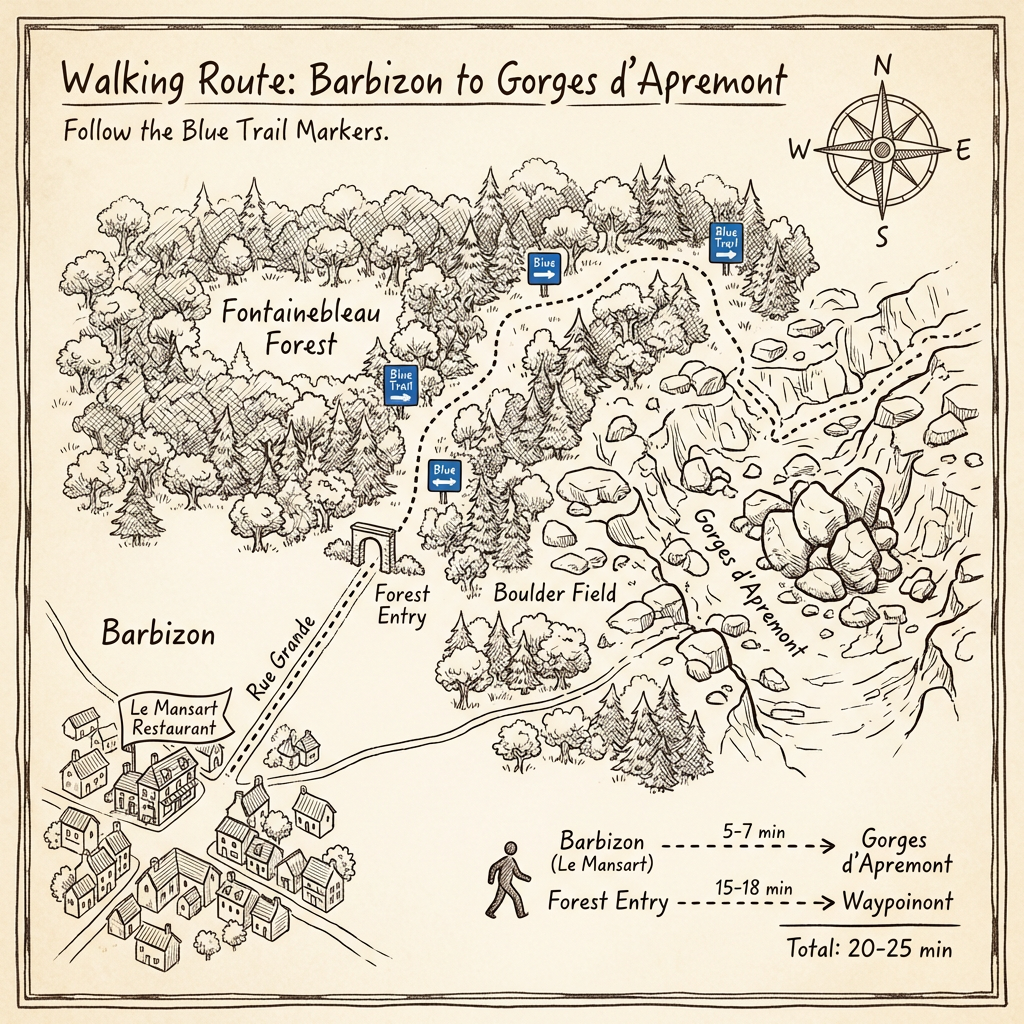
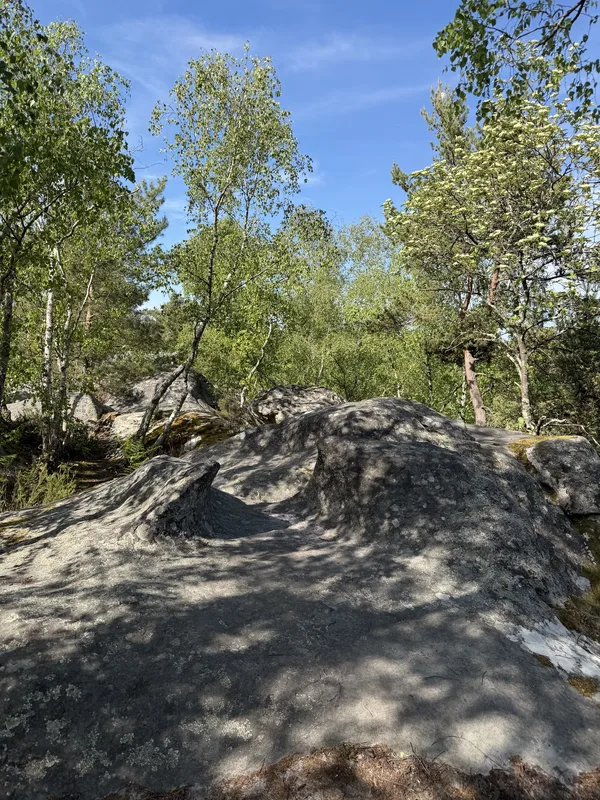
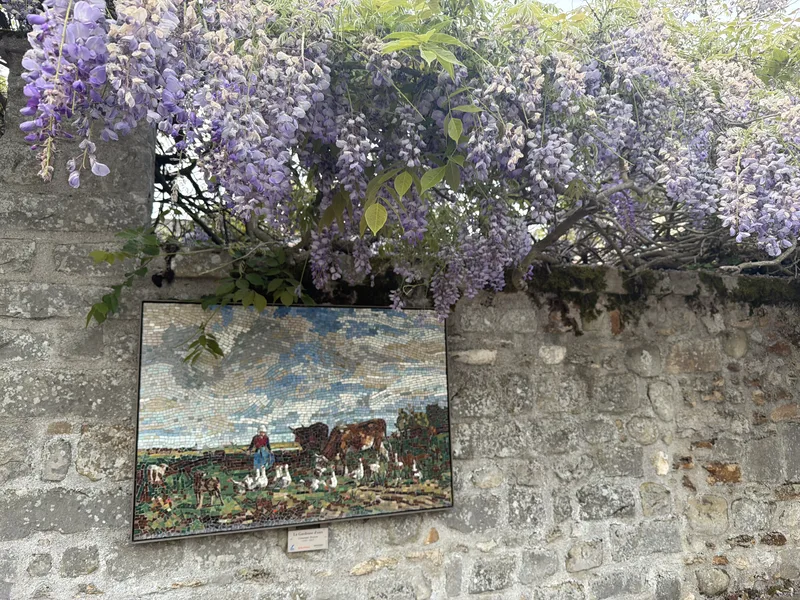
The first afternoon begins on the Sentier des Crêtes d'Apremont, where the light arrives through leaf cover in pieces. The forest here has the quality of a place that has outlasted whatever attention humans brought to it. The mosaic panels at La Folie Barbizon — a herder with cattle, a harvest scene drawn from Van Gogh — register this same pastoral fixation, the desire to freeze the land at some ideal moment of use. They hang on stone walls being quietly overgrown. The pastoral wants permanence; the wall has other plans.
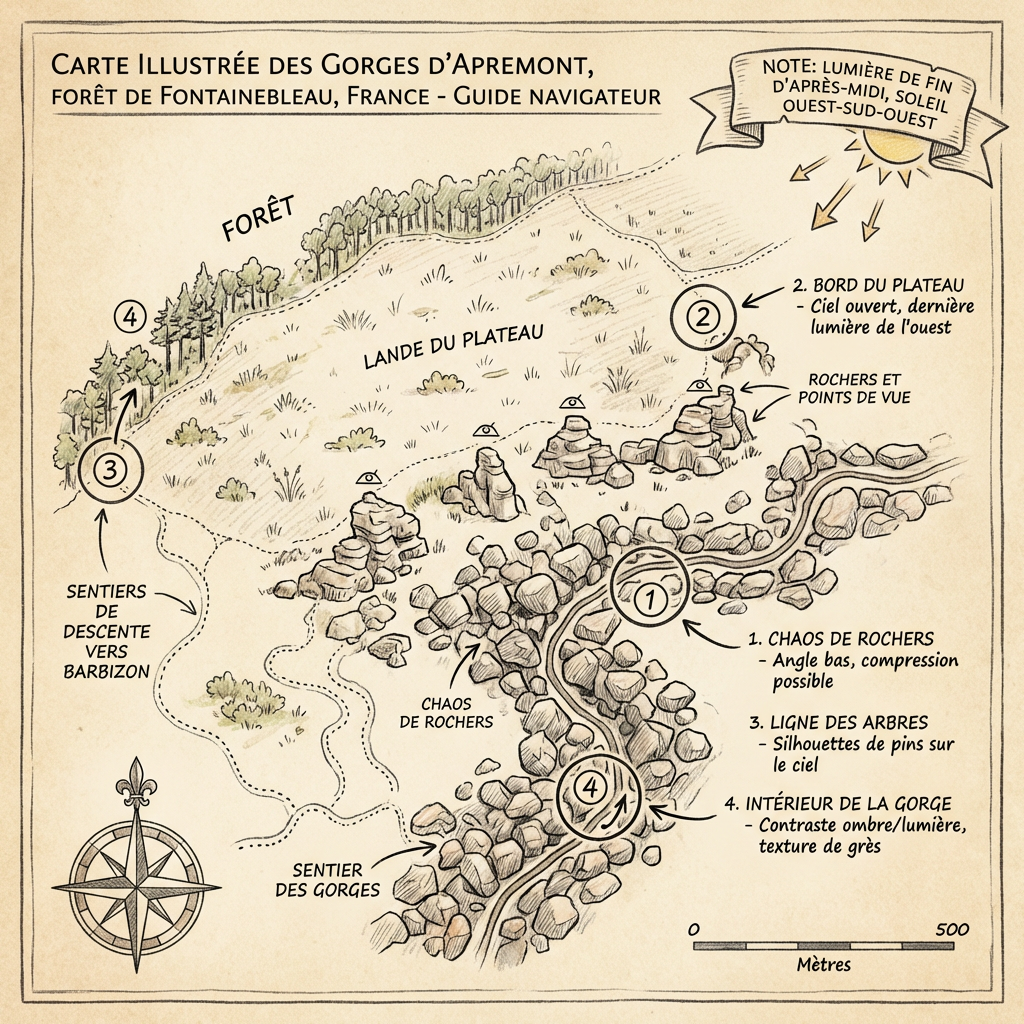
Sunday Morning, Gorges d'Apremont
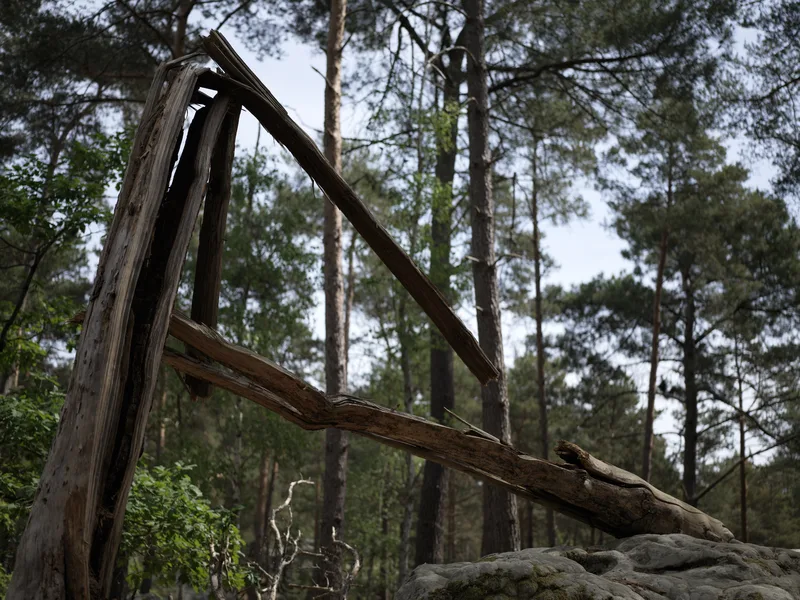
The second morning is given over to the dead. Not grimly — the forest at Apremont treats its fallen trees as a kind of unfinished business. A trunk split by storm or age forms an involuntary triangle against the sky. Another tree has fractured but not released, its upper limbs still aloft, held in suspension. A third has fallen across boulders and stopped there, spanning the gap, neither down nor standing. The forest keeps these forms around. It is not wasteful of its failures.
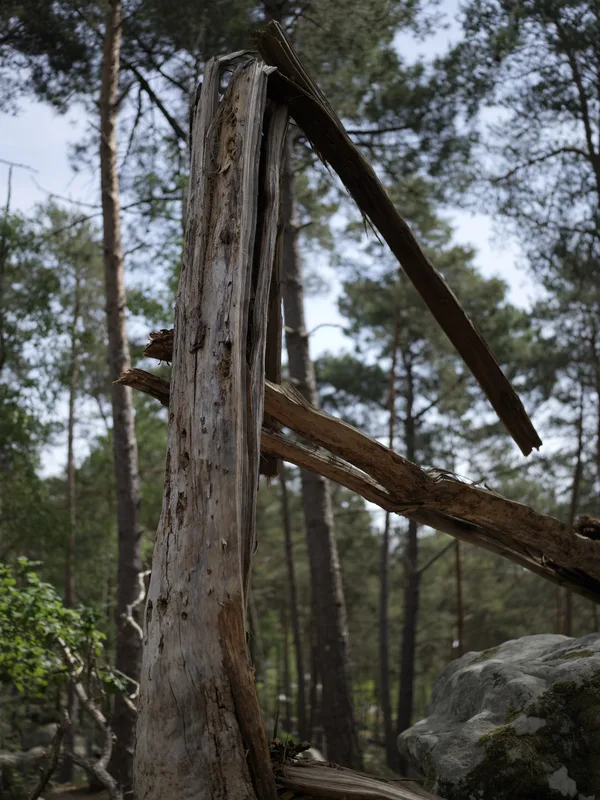
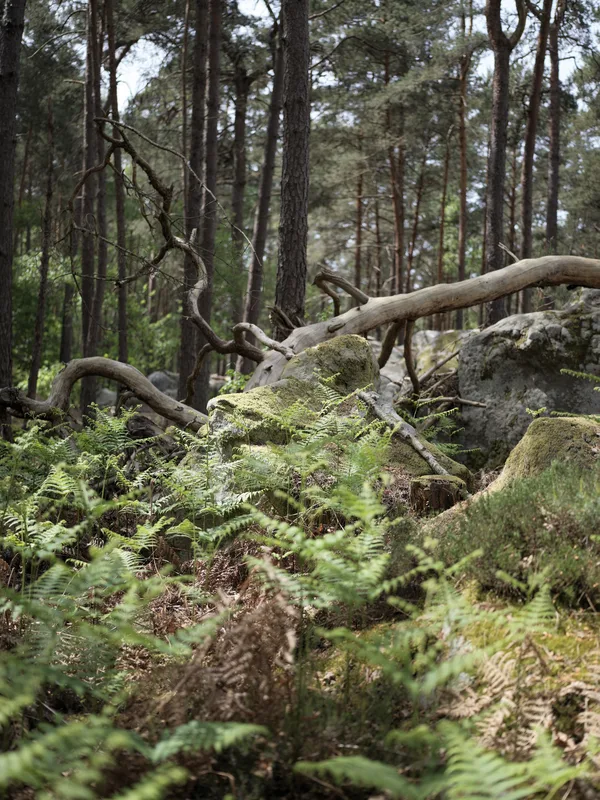
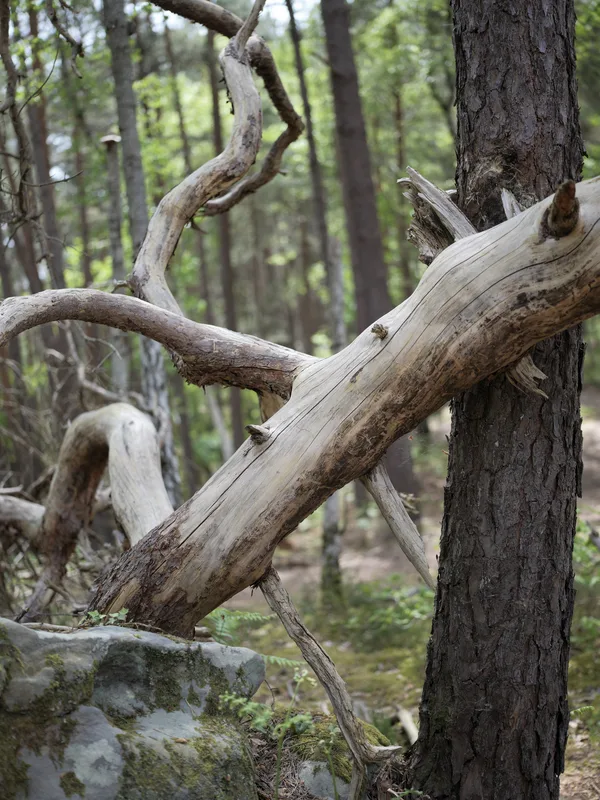
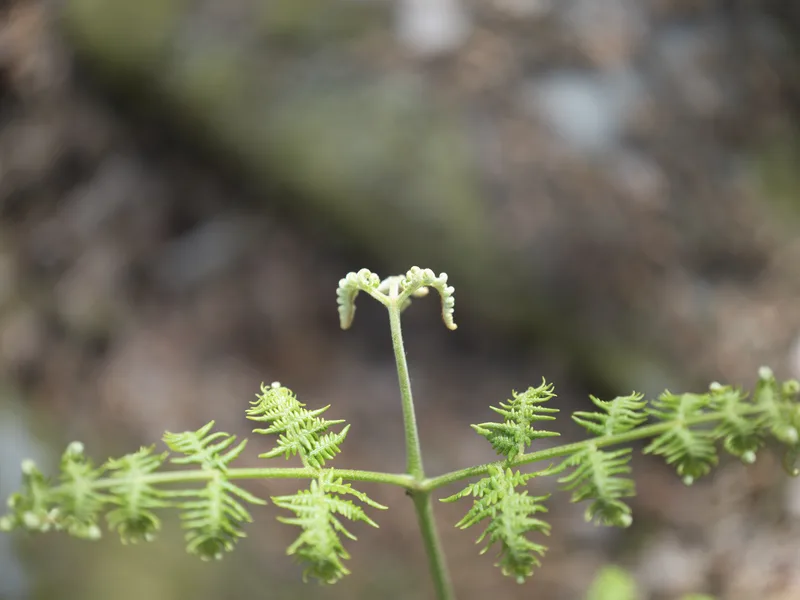
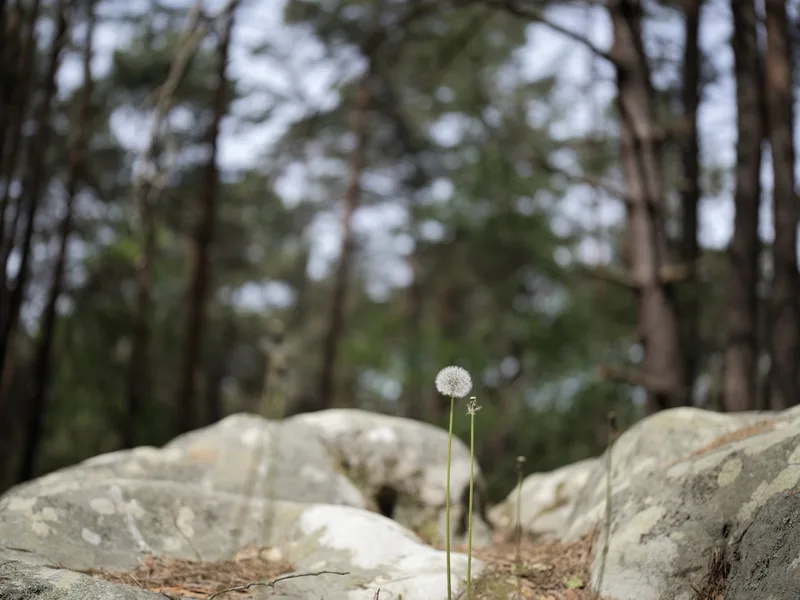
Against all this arrested collapse, the ferns are moving. In late April they are still fiddleheads — coiled, tight, rising from the pine-needle floor with an upward insistence that feels almost impolite given the company. They have not yet decided what shape they will be. Two dandelion seed heads grow from a granite crack; a mossy S-curved branch lies like a found sculpture. The forest is not making a point about renewal versus decay — it is just doing both at the same time, indifferently.
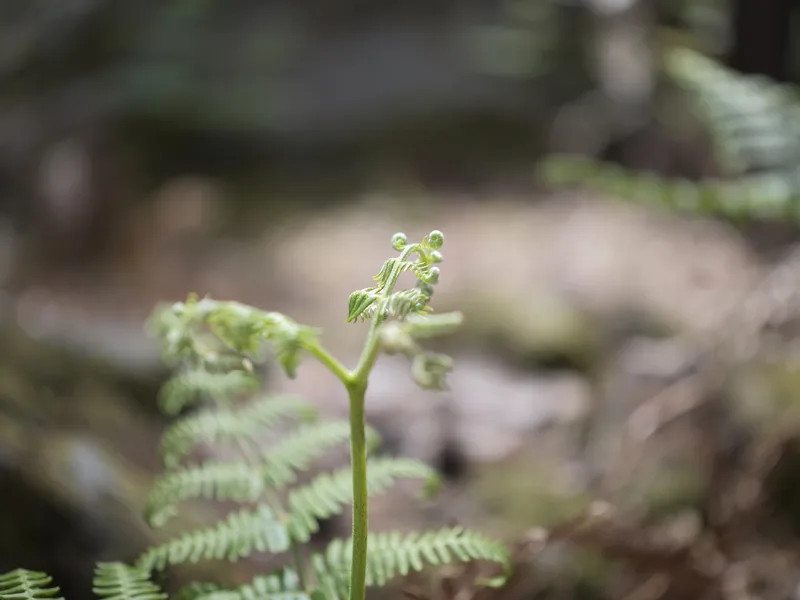
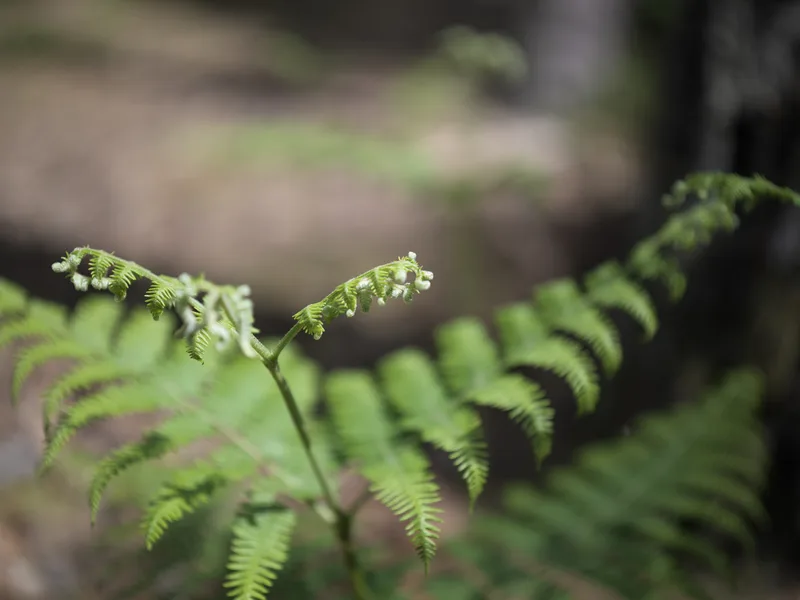
The forest keeps its failed forms. It is not wasteful of its failures.
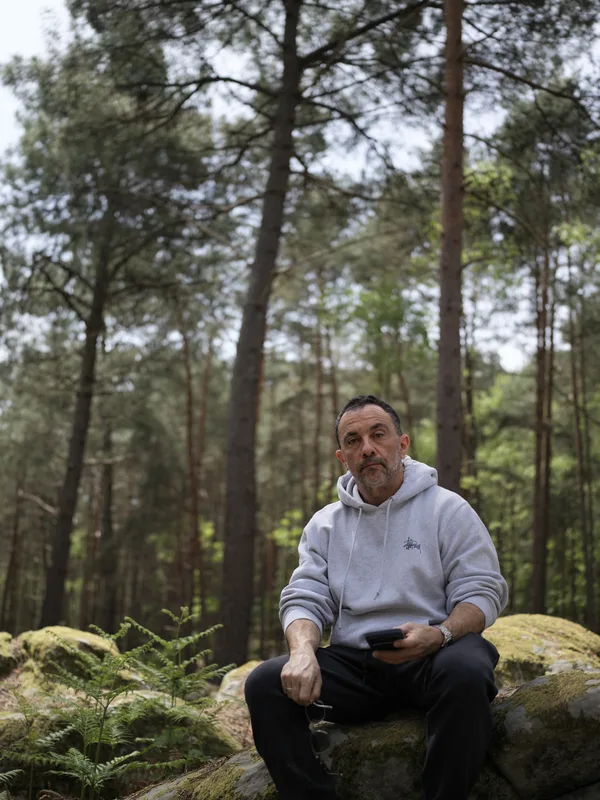
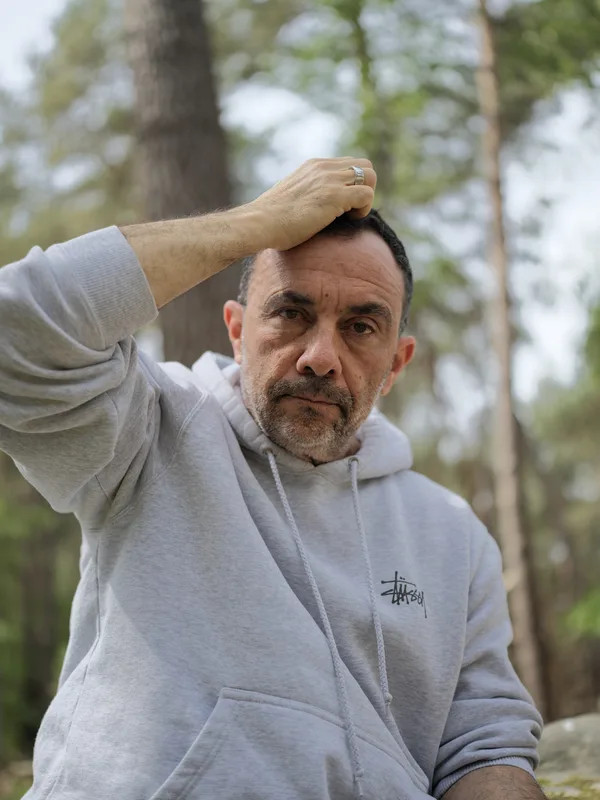
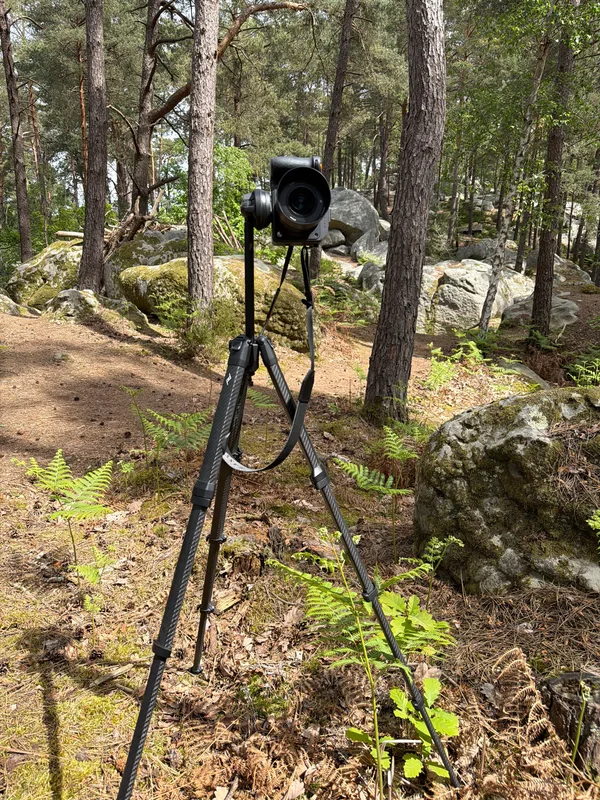
The man in the grey Stüssy hoodie appears on the boulders mid-morning. He is not walking. He is stopped, seated on mossy granite, holding his phone without looking at it. In one frame his palm is pressed to his forehead — a gesture that reads as tiredness, or as thinking, or as a brief negotiation with the light. He has brought the camera on a tripod; he has photographed the equipment itself. He is here the way photographers are here: partly present, partly working out what presence means.
Return
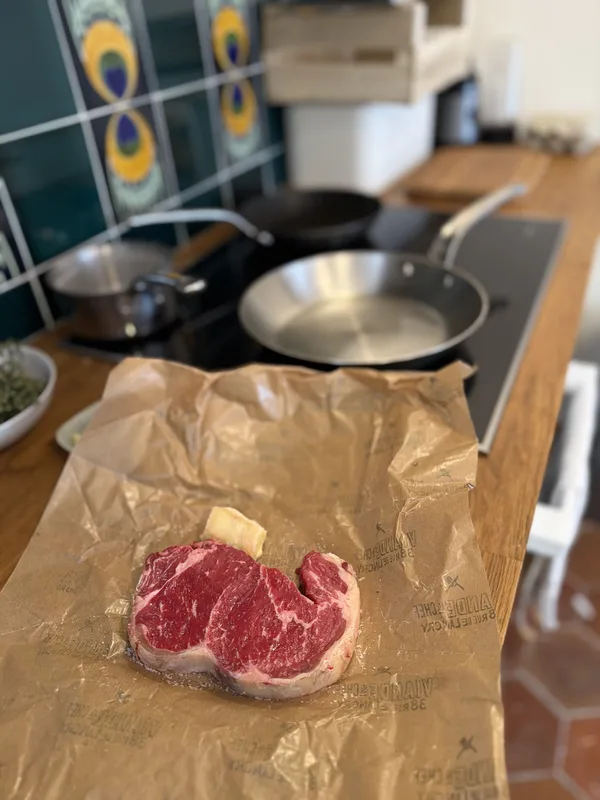
The forest was full of things caught between two states — the half-fallen tree, the unfurling fern, the man with the phone he wasn't reading. You leave Fontainebleau and make dinner, and the weekend folds back into the week, and you have the photographs as proof that the coiled things were really there.