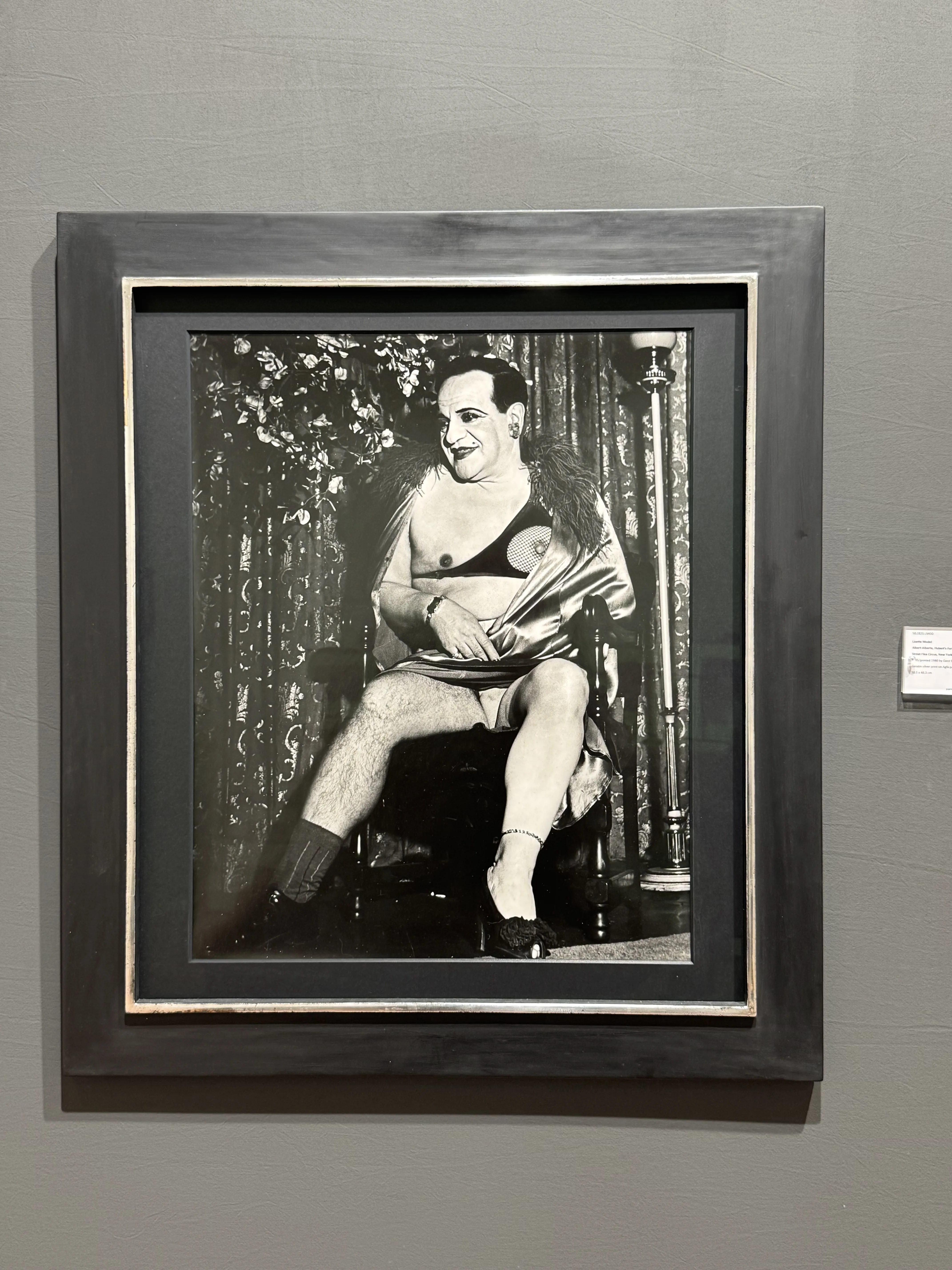
The score applies to the original photograph, not the re-photograph. As a document, this image carries the weight of a suppressed history and the formal confidence of a subject who understood portraiture as a tool of self-definition. Its current institutional framing activates Benjamin's question about context and aura — the print in the gallery is no longer underground; it has become testimony. The re-photograph itself is a competent record, nothing more.
- Formal
- Centered portrait composition with the subject seated and occupying roughly two-thirds of the internal frame. The framed photograph within the gallery context creates a photograph-of-a-photograph structure, adding a meta-layer to the reading. [object Object]
- Technical
- The original print reads as sharp at the face and torso within the constraints of mid-century emulsion. The re-photograph introduces mild softness from the phone camera resolving a framed print under gallery illumination — not a fault of the original. The gallery re-photograph is well exposed for the print surface. Slight loss in the deepest blacks due to ambient light interference. The original print appears correctly exposed for its era and intent. Adequate. The original's full tonal range is partially flattened by the secondary shooting environment. No significant clipping visible.
- Semantic
- This is a studio portrait made within or adjacent to a burlesque or drag performance culture. The subject is not hiding; they are posing with deliberate theatricality. The image documents a moment of self-presentation that, in its historical context, was an act of significant social risk and equally significant communal affirmation.
- Historical
- Mid-century queer and drag portrait photography; Burlesque and cabaret documentation; Underground vernacular photography surfaced through archival recovery; Queer archive as counter-history; [object Object]; [object Object]; [object Object]
- Curatorial
- Subject's gaze and posture transform potential spectacle into self-possession — the image refuses to be merely documentary The compressed studio backdrop flattens the figure into a formal plane that approaches the iconic without losing specificity Historical rarity: this category of mid-century queer self-presentation was systematically suppressed; the image's survival is itself a formal argument