The practice
Fifty-Six at Cathedral Rock
A duration study, a reversal, and the one picture nobody else could take
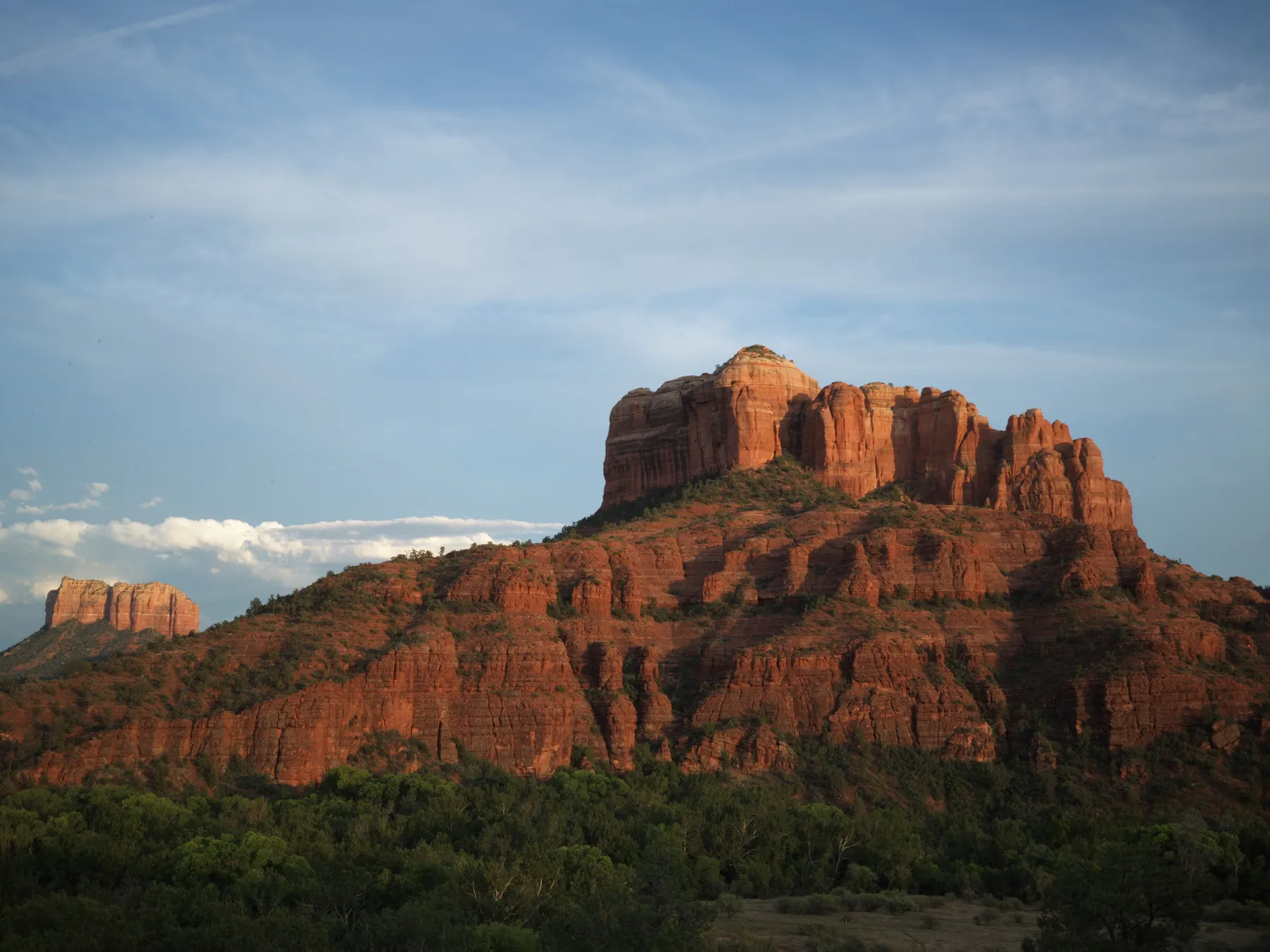
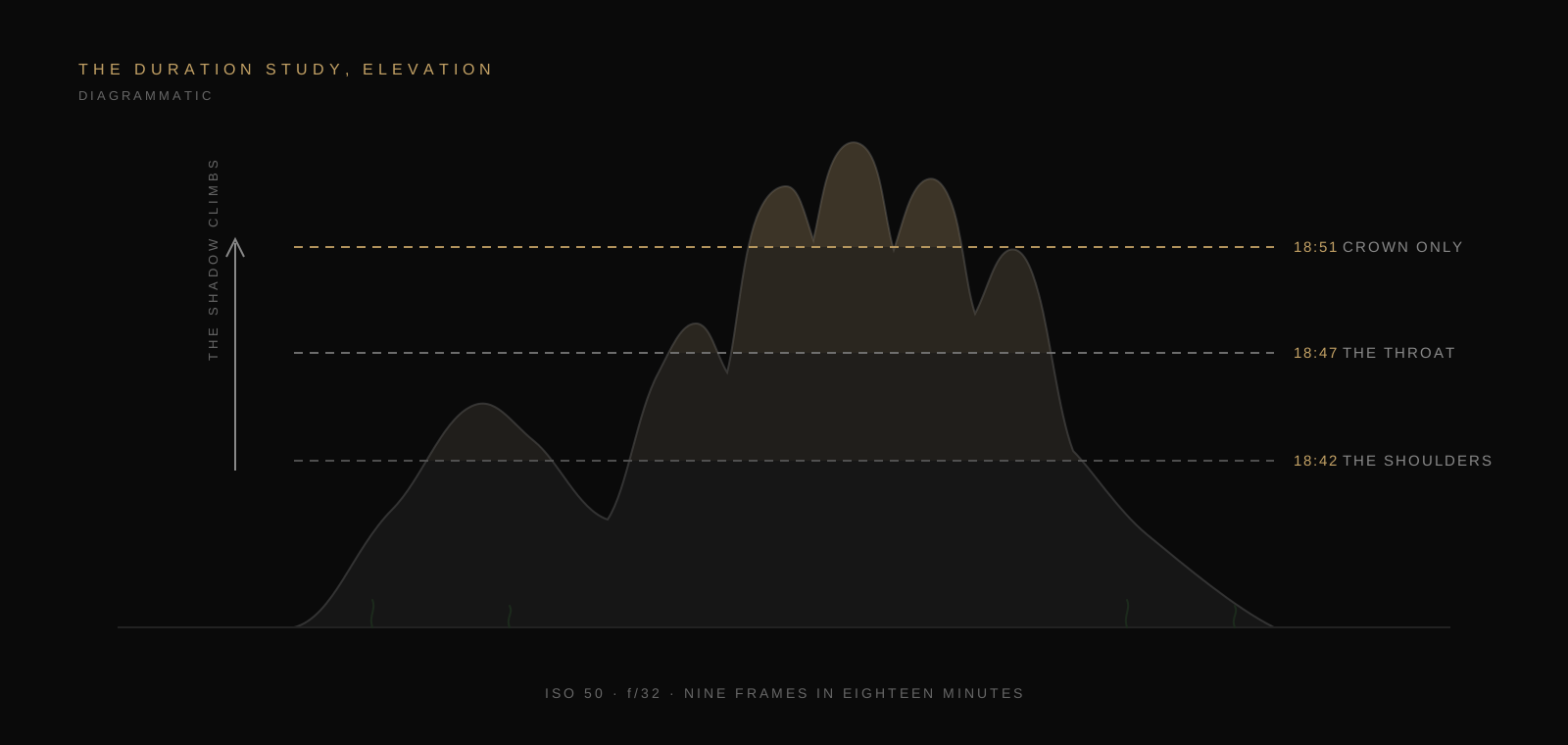
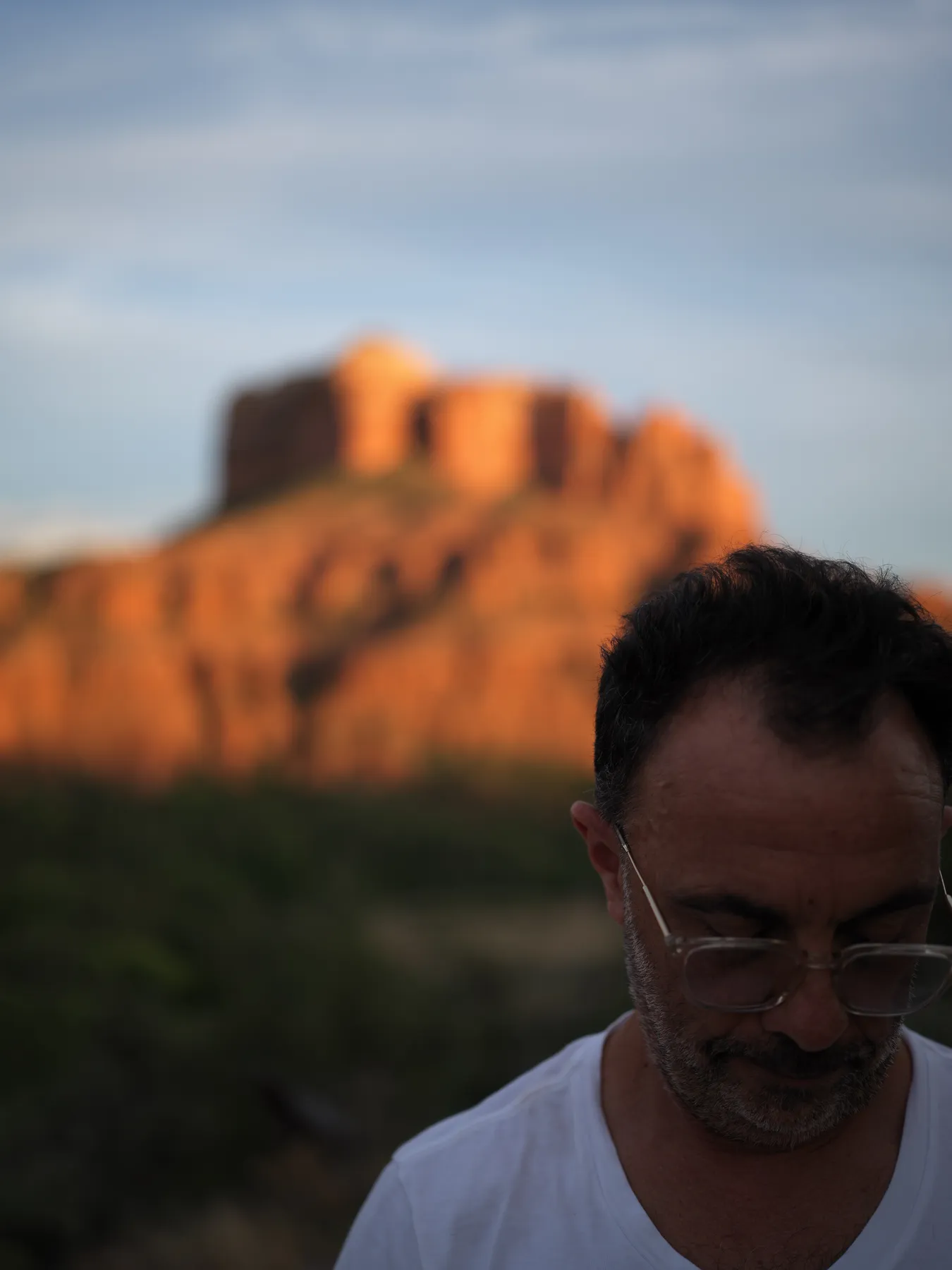
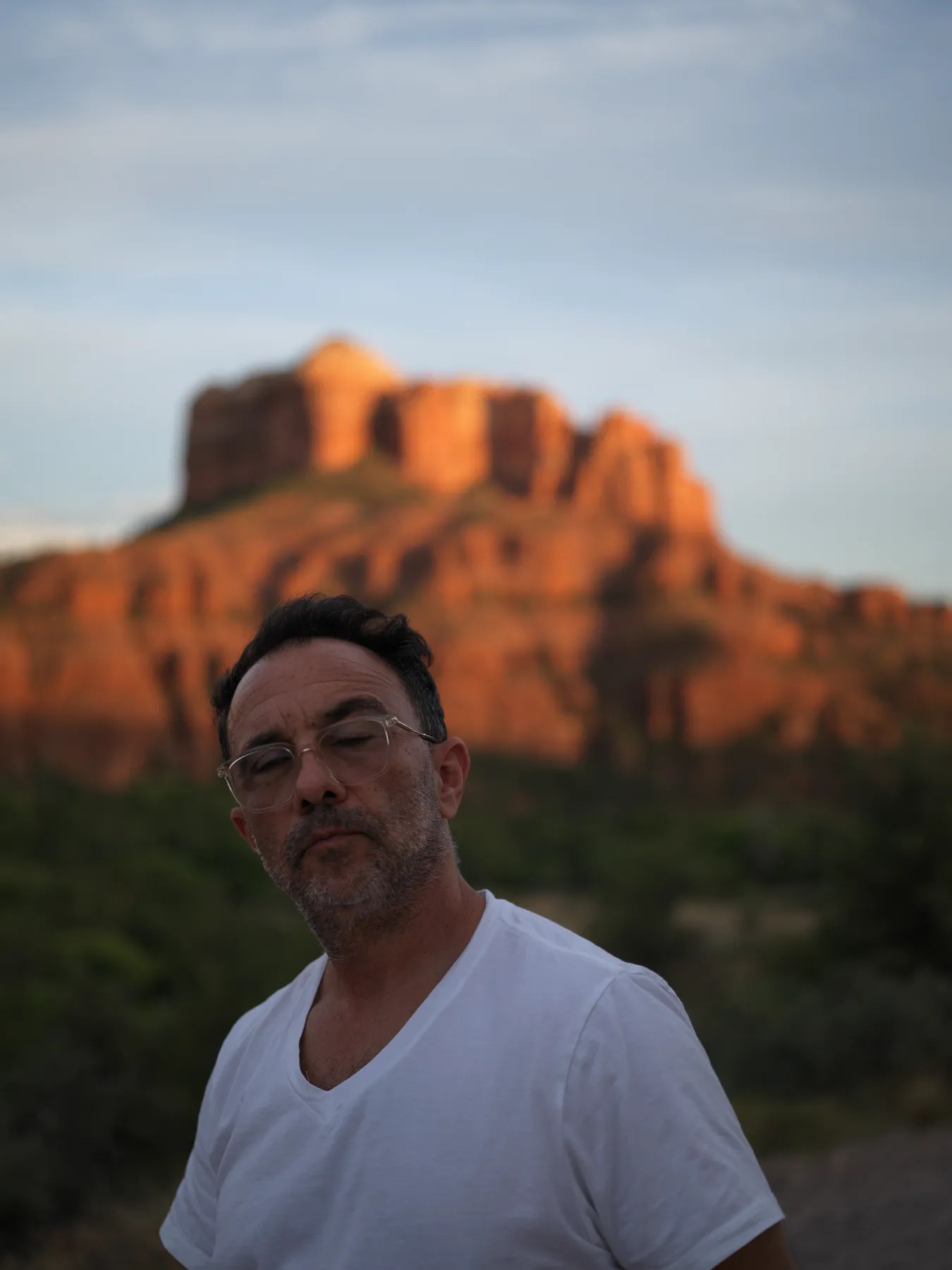
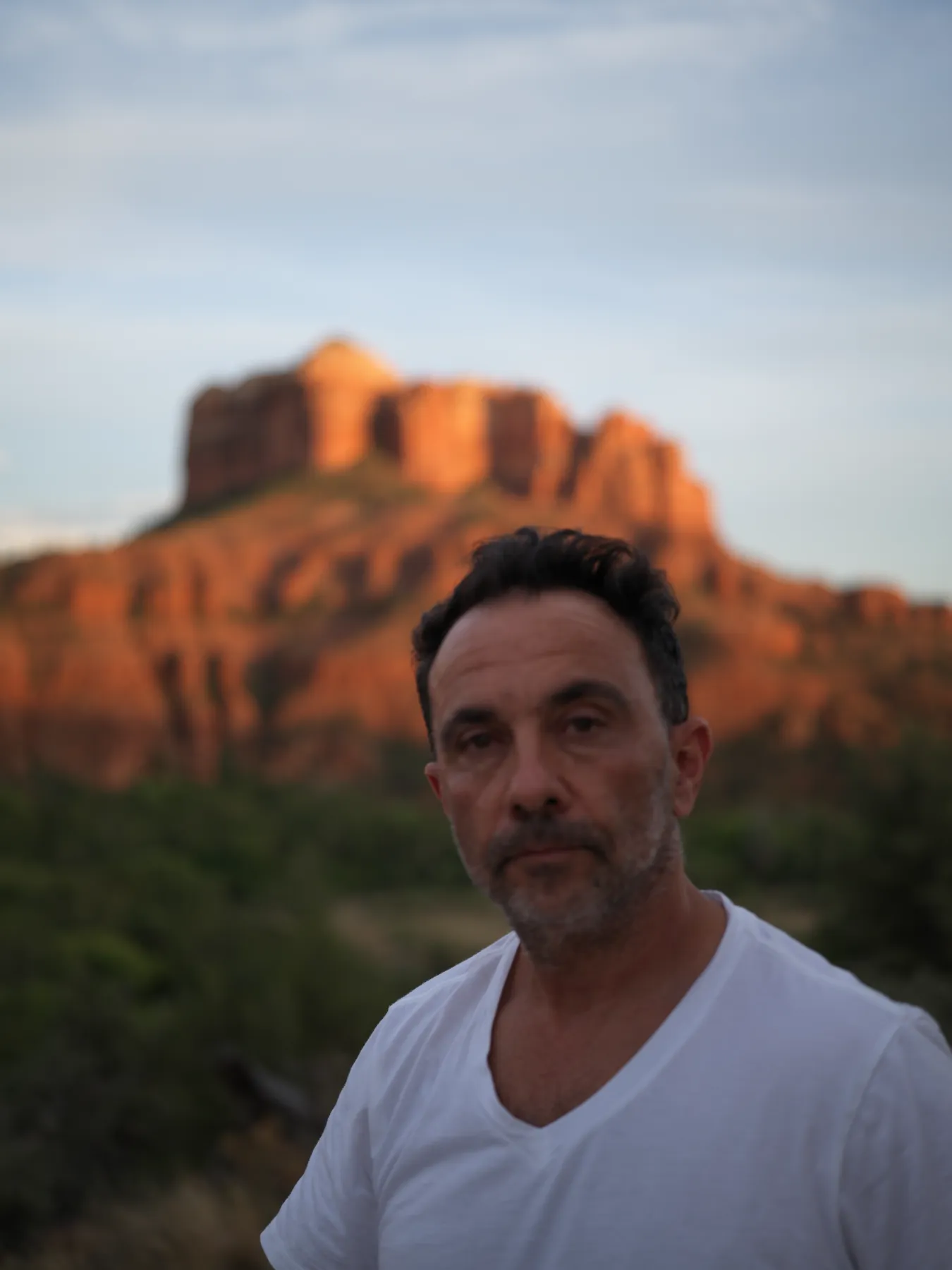
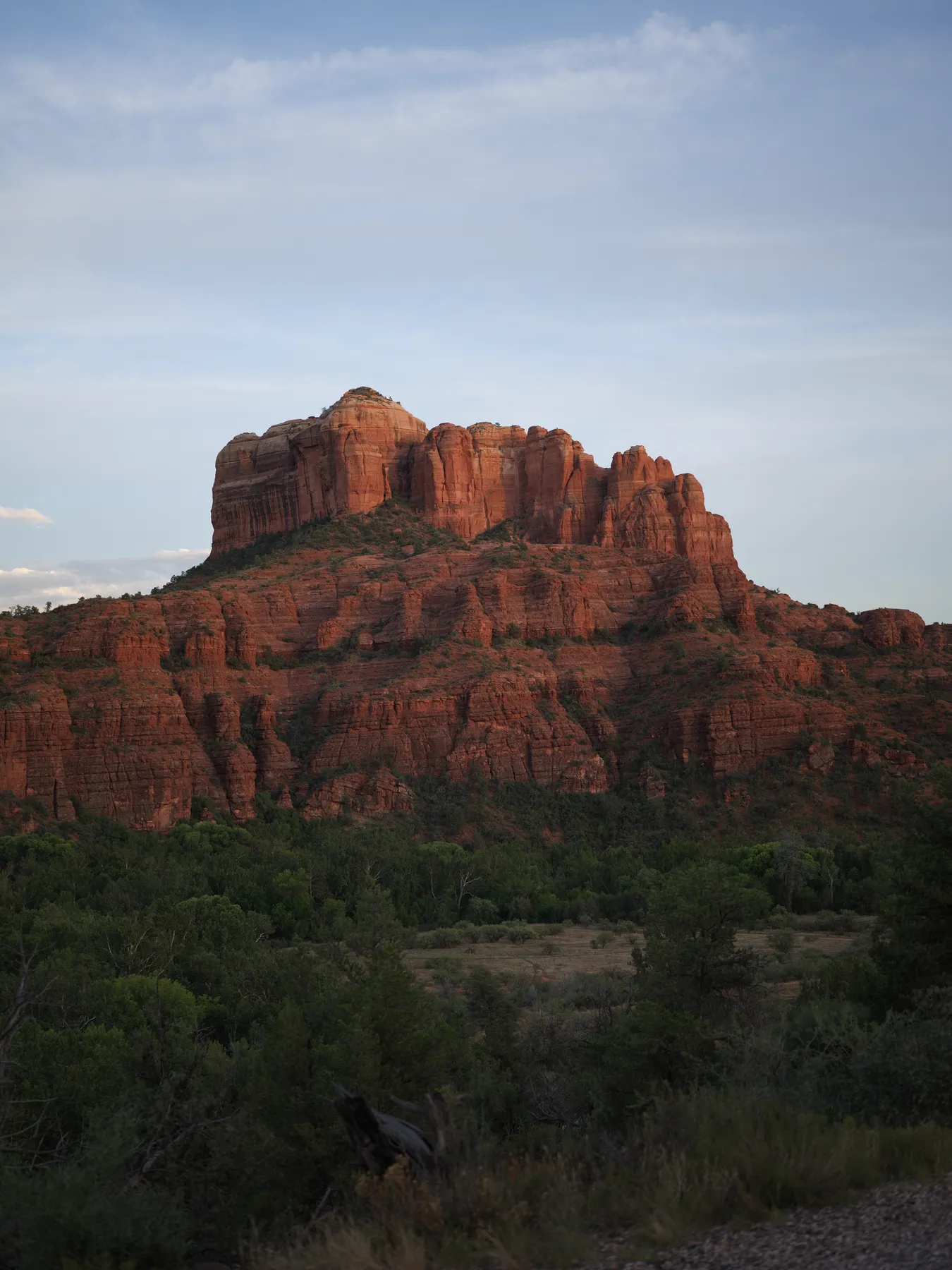
A man spends eighteen minutes photographing a rock, and then leaves the camera where it stands and walks into his own frame, the shutter in his hand disguised as a phone. That is the whole roll, and it is not a small thing. The first movement is a study of light leaving Cathedral Rock — nine frames, stopped down to f/32, the shadow line climbing the formation like water filling a tank. The second movement opens the lens to f/2.5 and reverses the subject: the rock becomes six hundred feet of orange blur, and in front of it stands the photographer, alone, one day into his fifty-seventh year, taking his own picture.
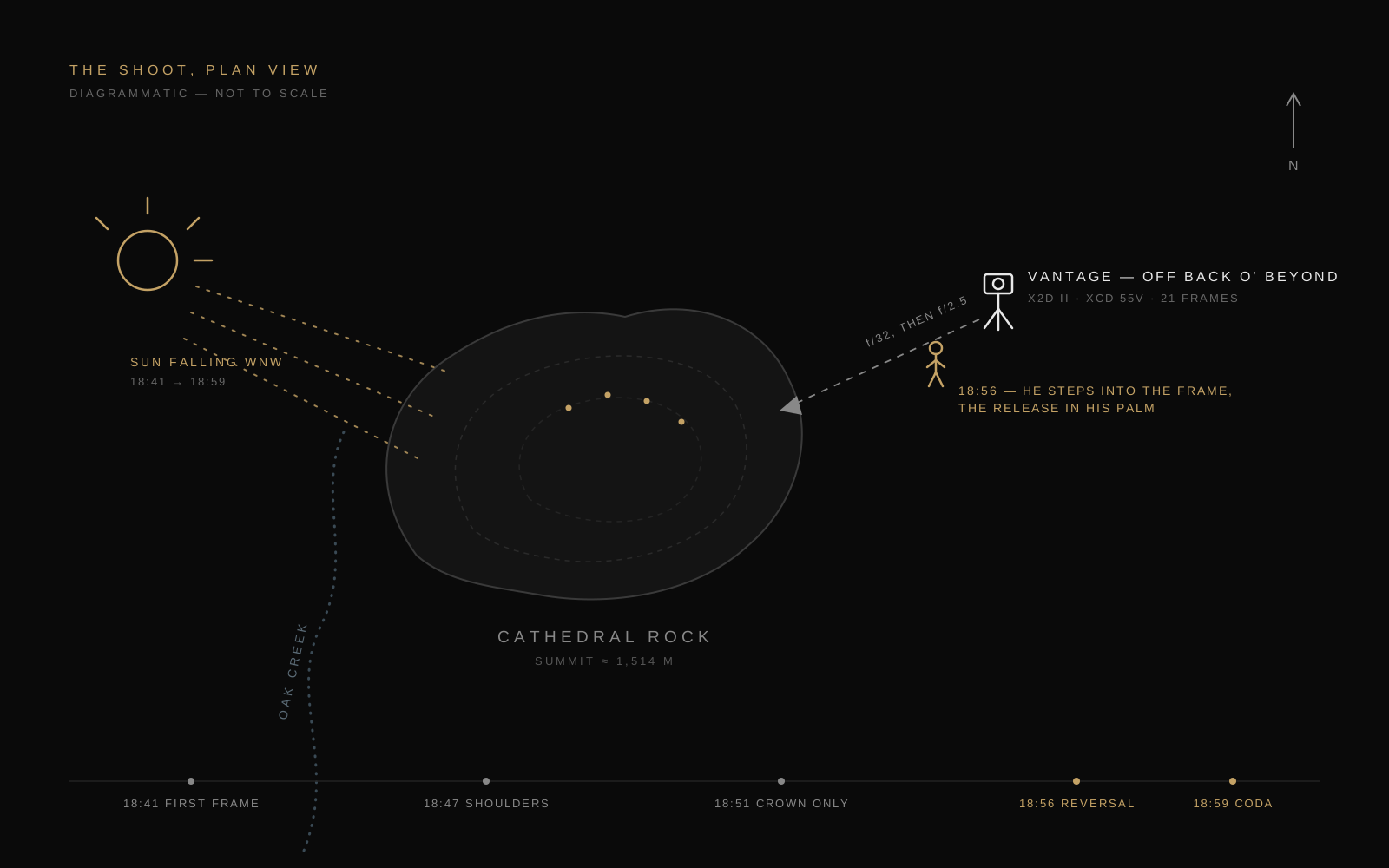
The duration study is the older instinct — Monet's haystacks run at ISO 50. What changes between 18:42 and 18:51 is not the rock but the argument: at 18:42 the light is a condition, by 18:51 it is an event, down to the crown only, the kind of light you can watch end.
That morning, before the light, there had been a reading. An astrologer and tarot reader of fifteen years — Sedona her ground — laid cards for him and Kristi, the day after his fifty-sixth birthday. His question was not about direction; he has never lacked direction. It was about pace: how do we measure ourselves? The cards answered with suspension. The Hanged Man. Give it four seasons. Wisdom arrives not a moment sooner, not a moment later — and do not manifest anything that eats your freedom. For a man who sees six months out and never catches up with himself, this was not comfort; it was correction.
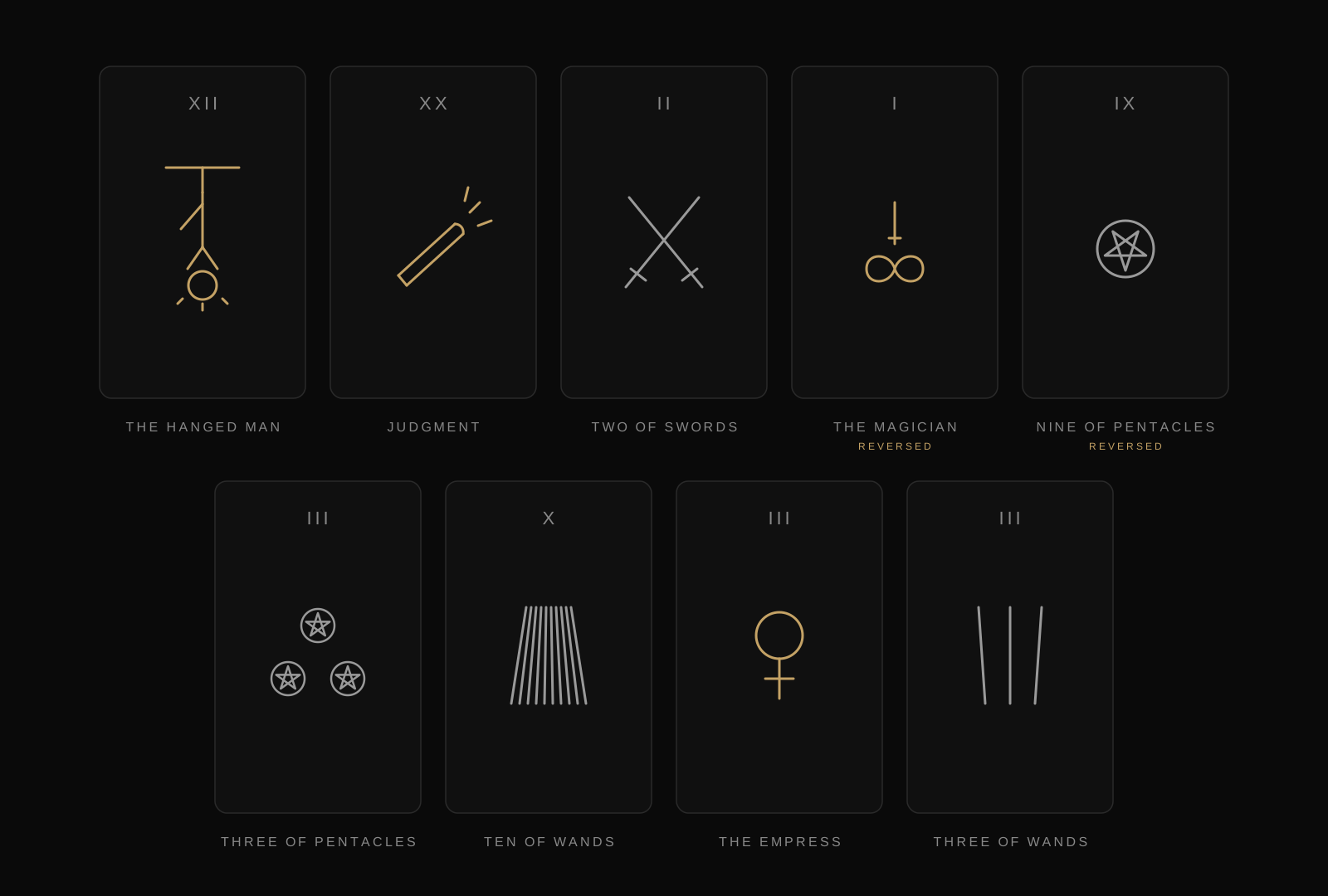
Eight hours later he set the camera in front of Cathedral Rock and practiced it. The duration study is the reading performed: ISO 50, f/32, nine frames of nothing happening except the one thing that cannot be hurried. You do not photograph light leaving a rock by seeing six months out. You stand there while a shadow climbs six hundred feet of stone at exactly the speed it chooses, and you accept the frame you are given, not a moment sooner, not a moment later.
Then the reversal. The EXIF records it plainly: aperture drops from f/32 to f/2.5 at 18:56 and never goes back. Nobody else is holding the Hasselblad — nobody is holding it at all. Every portrait that follows is self-made, triggered from the palm of the man in the picture, which puts the roll in the oldest self-portrait tradition there is: the photographer as both eye and evidence, with the cable release hidden in a fist. The reading had said: you cannot do everything yourself. The roll answers: except this. The one picture nobody else could take is the one where you stop and let yourself be seen by your own instrument.
Notes
- The reader's name is withheld here until she has said yes to appearing in it. The reading is quoted only where it touched the photographs. ↩